The Real Trade-Off
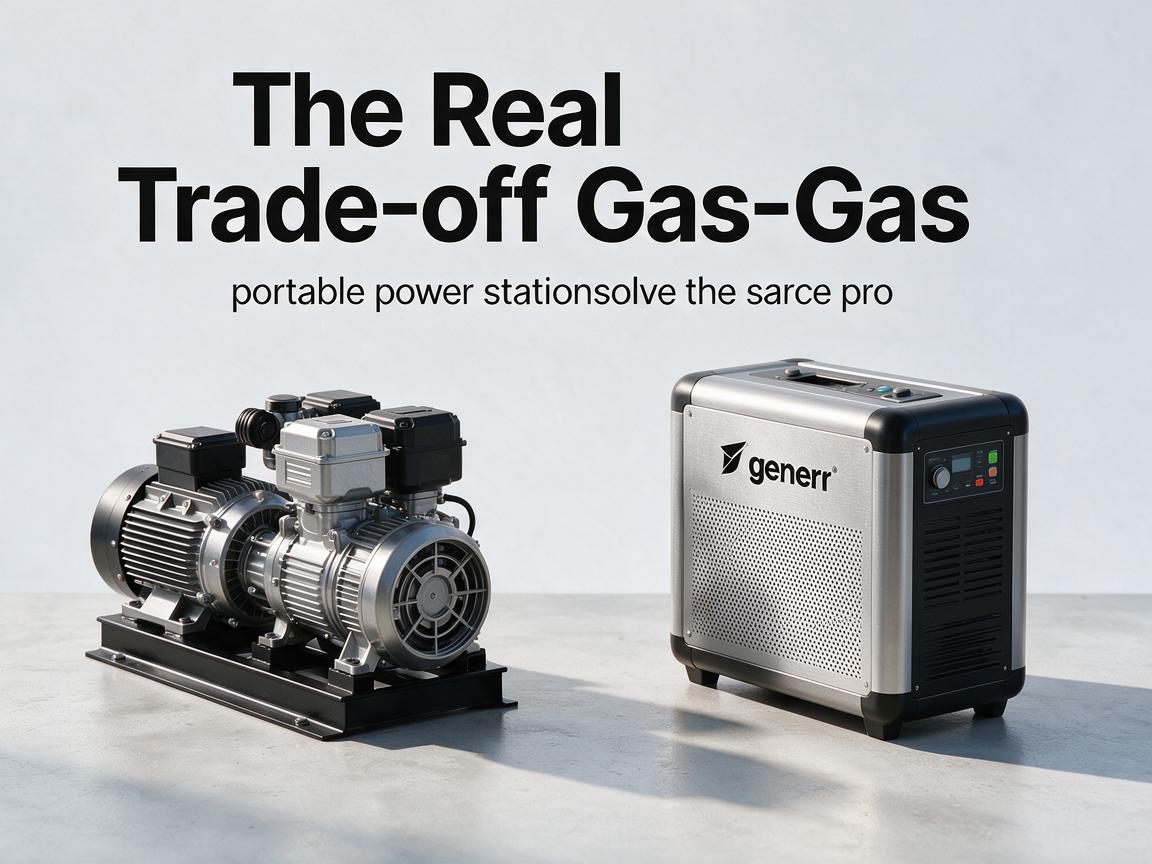
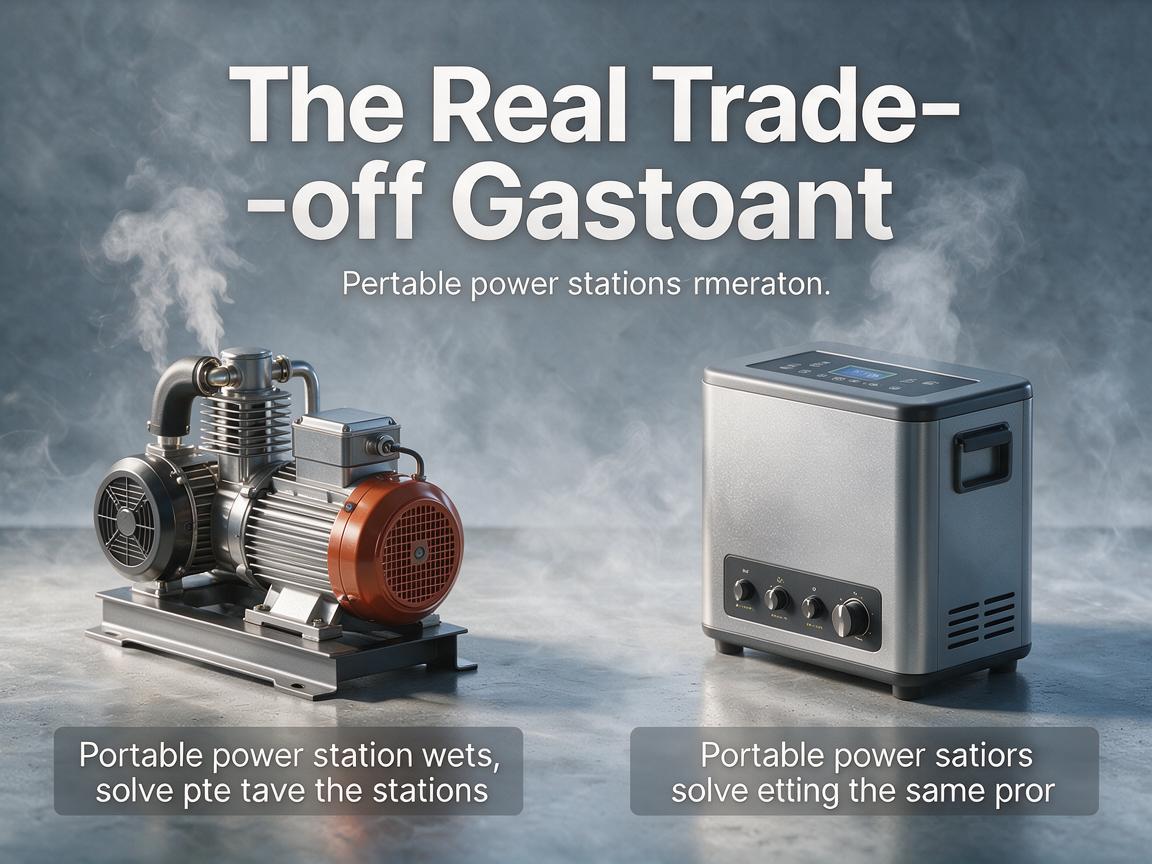
Gas generators and portable power stations solve the same problem — getting electricity when the grid is down — with fundamentally different trade-offs. Gas wins on raw energy per dollar; power stations win on convenience, silence, and indoor safety. The right choice depends on how you actually use backup power.
Head-to-Head Comparison
| Spec | 2 kWh Power Station | 2 kWh Gas Generator |
|---|---|---|
| Cost | $1,200–2,000 | $400–800 |
| Weight | 30–60 lb | 45–90 lb |
| Noise | 30–50 dB | 55–70 dB |
| Indoor safe | Yes | No (CO risk) |
| Fuel needed | No | 1–2 gal/day |
| Runtime per fill | 2 kWh total | 8–12 kWh per gallon |
| Surge capacity | 2–6× rated | 2–3× rated |
| Maintenance | None | Oil, plugs, carb annual |
| Shelf readiness | Always ready | Stale fuel after 30 days |
Energy Density: Gas Wins Big
One gallon of gasoline contains roughly 33.7 kWh of chemical energy. A small inverter generator converts 20–25% of that into usable AC, giving 6–8 kWh per gallon. To equal that with batteries, you would need a 6,000+ Wh power station that costs $4,000+ and weighs 100 lb. For multi-day outages above 5 kWh/day, gas is simply more economical.

Silent Indoor Backup: Power Station Wins
A 2,000 Wh power station runs a fridge, lights, router, and CPAP through the night silently and indoors. No ventilation, no carbon monoxide risk, no fuel storage. For apartment dwellers, RV overnight use, and home offices where noise matters, this is the deciding factor.
Maintenance and Readiness
Gas generators need annual oil changes, spark plug replacement, carburetor cleaning, and fuel stabilizer. Even then, fuel goes stale in 30–60 days. A power station needs nothing — leave it plugged in at 40–60% charge and it will be ready in 5 years. For someone who only uses backup power during outages, the power station’s “always ready” advantage is significant.
Surge and Motor Starts
Gas generators excel at surge loads — a 2,200 W inverter generator can start a 7,000 BTU window AC or a small well pump. Power stations have larger surge ratings (3–6× rated), but the surge is brief. For sustained motor loads like air compressors or table saws, gas remains the better choice.
Solar Recharge Capability
Only power stations can recharge from solar. Pair a 2,000 Wh station with 400 W of solar and you can run a fridge indefinitely off-grid without buying fuel. Gas generators cannot recharge themselves — once the tank is empty, you need more fuel.
Best Use Cases
- Choose a power station if: You live in an apartment or area where gas storage is illegal, your outages are under 24 hours, noise is a deal-breaker, or you want solar recharge for off-grid use.
- Choose a gas generator if: Your outages exceed 48 hours, you need to run well pumps or large AC units, fuel storage is legal and convenient, or you need 5+ kWh/day on a tight budget.
- Choose both if: You live rural and want silent nighttime power (station) plus daytime bulk generation (gas).
Editor’s Picks: Recommended Accessories
Whichever you choose, these accessories round out your backup plan:
- citicr Portable Charger 10000mAh PD20W — pocket-sized phone backup that bridges any gap.
- INIU Laptop Power Bank 20000mAh 65W — keeps laptops running without tapping the main unit.
- Anker Laptop Power Bank 25000mAh 165W — premium high-output USB-C bank.
- WOLFBOX MV16A Jump Starter — 12 V jump start and USB power for car-side emergencies during evacuations.
Summary
Gas wins on cost per kWh and sustained motor loads. Power stations win on silence, indoor safety, maintenance-free readiness, and solar recharge. Most homeowners are best served by a 1–2 kWh power station for daily essentials and — if outages regularly exceed 48 hours — a small inverter generator for daytime bulk power. The two technologies are complements, not competitors.